Commercial Indoor Air Quality Services for Cincinnati Businesses
Why Commercial Indoor Air Quality Services Are Critical to Your Business’s Health and Performance
At Jarvis Mechanical Co., we see every day how indoor air quality (IAQ) impacts more than comfort; it directly influences employee health, cognitive function, and operational efficiency. Contaminated air can cause respiratory issues, increase sick days, and reduce focus, which all erode productivity and profitability. As a commercial HVAC partner serving businesses across Greater Cincinnati and the surrounding region, we understand how proper IAQ strategies protect both people and facilities. This article outlines why commercial IAQ services matter, how filtration and HVAC maintenance improve outcomes, and practical steps businesses can take to maintain a healthier workplace and stronger bottom line.
Key Benefits of Commercial Air Filtration Systems
Commercial air filtration systems remove pollutants, allergens, and microscopic particles from indoor air to create a safer environment for employees and visitors. When Jarvis Mechanical designs or maintains these systems, our focus is always on measurable health improvements, better energy performance, and alignment with industry regulations and building standards. When systems are sized, installed, and maintained correctly, businesses see fewer complaints, fewer breakdowns, and more predictable operating costs.
How Air Filtration Systems Improve Business Air Quality
Filtration systems capture airborne contaminants such as dust, pollen, mold spores, and volatile organic compounds (VOCs). Using advanced media and multi-stage filtration, these systems reduce particle counts and odor loads, which leads to fewer respiratory complaints, lower absenteeism, and improved concentration among staff. Jarvis Mechanical technicians routinely evaluate filtration performance during service visits to ensure systems are operating at peak efficiency and delivering the air quality outcomes businesses expect.
Most Effective Filtration Technologies for Indoor Air Pollution Control
Several technologies are commonly deployed in commercial settings to control indoor pollution. The most effective options include:
HEPA Filters: Capable of trapping 99.97% of particles down to 0.3 microns, HEPA filters are highly effective against allergens and fine particulate matter.
Activated Carbon Filters: Designed to absorb odors and a wide range of VOCs, carbon media improves perceived air quality and occupant comfort.
UV Light Systems: Ultraviolet systems inactivate bacteria and viruses on coils and in air streams, reducing microbial loads when used as part of a broader IAQ strategy.
Evidence consistently highlights the important role of HEPA-level filtration in lowering indoor particulate concentrations and protecting occupant health. Jarvis Mechanical helps clients determine which technologies best match their building’s needs, budget, and operational goals.
HEPA Filters: Essential for Indoor Air Quality & PM Removal
With modern populations spending approximately 90% of their time indoors, particulate matter (PM) is a major indoor air quality concern. High-efficiency particulate air (HEPA) technologies are widely used to reduce PM levels in occupied spaces.
Factors affecting real-world applications of HEPA purifiers in improving indoor air quality, SD Lowther, 2023
Knowing each technology’s strengths helps facility managers, and service partners like Jarvis Mechanical, design systems that address specific contaminants and operational goals.
How Industrial HVAC Air Quality Affects Employee Health and Productivity
HVAC performance determines the quality of the air circulating through a facility. Poorly maintained systems can distribute pollutants and reduce ventilation effectiveness, increasing respiratory complaints and absenteeism. Conversely, well-maintained, properly balanced HVAC systems deliver cleaner air, support better concentration, and contribute to consistent productivity levels across the workforce.
Research shows that optimizing HVAC systems is essential to manage energy use while protecting occupant health and sustaining productivity. Jarvis Mechanical’s preventive maintenance programs are built around this balance; ensuring systems run efficiently without sacrificing IAQ.
HVAC Optimization: Balancing Energy, IAQ, Health & Productivity
Reducing HVAC operating costs while preserving indoor air quality requires a thoughtful balance between ventilation, filtration, and system efficiency. Proper optimization maintains IAQ without compromising energy performance.
Energy optimization of HVAC systems in commercial buildings considering indoor air quality management, L Yu, 2018
Our technicians use data-driven diagnostics and real-world experience to help clients achieve this balance year-round.
Which Ventilation Standards Support Optimal Indoor Air Quality?
Ventilation guidelines from organizations like ASHRAE establish minimum fresh-air rates and best practices to limit pollutant buildup. Adhering to these standards helps ensure adequate dilution of contaminants, consistent air changes, and predictable indoor conditions that protect occupant health and comfort. Jarvis Mechanical incorporates these standards into every design, service plan, and system evaluation.
How Better Air Quality Cuts Workplace Illness and Absenteeism
Cleaner indoor air reduces exposure to allergens, irritants, and infectious particles, which lowers the incidence of respiratory symptoms and related sick days. A healthier environment also boosts morale and engagement, contributing to a steadier, more productive workforce. Many of our clients see noticeable improvements in employee comfort and satisfaction after implementing IAQ upgrades.
Best Practices for Commercial HVAC Maintenance to Preserve Air Quality
Consistent, proactive maintenance keeps systems running efficiently and prevents contaminants from circulating. Core practices include:
Regular Filter Changes: Replacing filters every 1–3 months maintains airflow, extends equipment life, and preserves filtration performance.
Biannual Inspections: Scheduled checks by qualified technicians identify wear, leaks, and balancing issues before they escalate.
System Cleaning: Routine cleaning of coils, ducts, and components prevents dust and microbial buildup and improves overall air circulation.
Jarvis Mechanical’s maintenance approach emphasizes prevention, documentation, and long-term reliability; helping businesses avoid unplanned downtime and IAQ-related complaints.
How Often Should Commercial HVAC Systems Be Serviced for Optimal Performance?
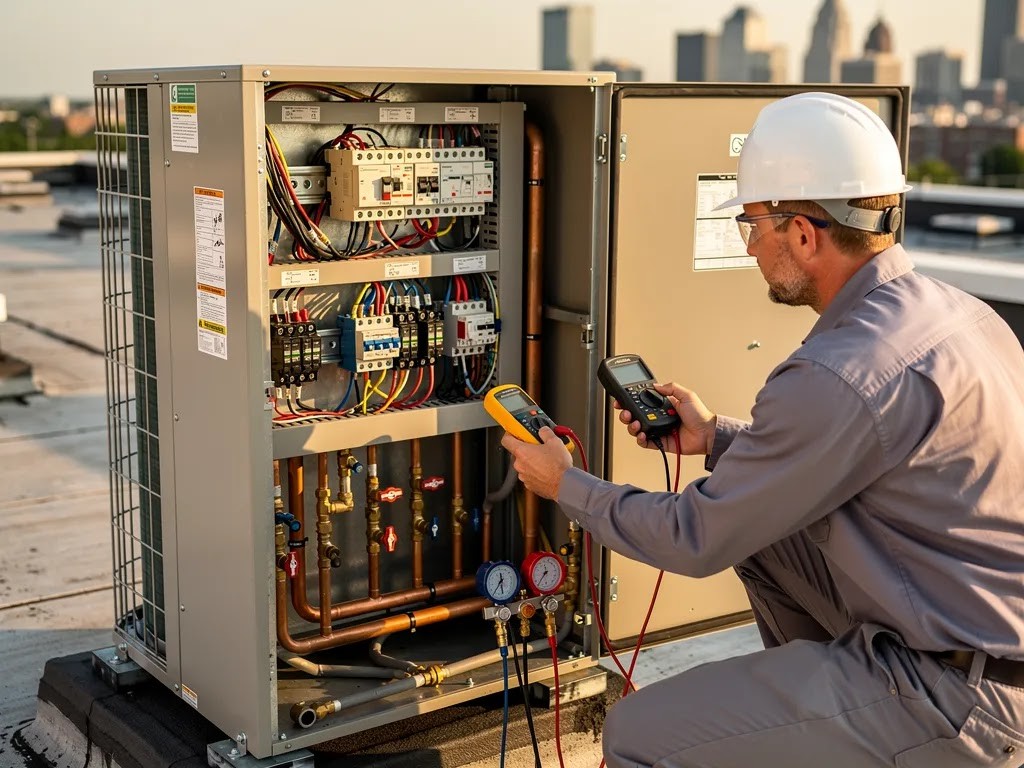
Commercial systems should typically be serviced at least twice a year, ideally before the heating and cooling seasons. Regular service tasks include checking refrigerant, testing electrical connections, inspecting belts and motors, and cleaning coils to ensure efficient, consistent operation. Our team schedules these visits strategically to minimize disruption and maximize system performance.
What Maintenance Programs Does Jarvis Mechanical Co. Offer for Long-Term Air Quality Solutions?
Jarvis Mechanical Co. provides tailored maintenance programs that combine scheduled service, emergency repairs, and predictive maintenance to keep IAQ systems performing long-term. Our programs are built around transparency, communication, and proactive care; ensuring businesses maintain compliance, reduce downtime, and protect occupant health through planned, reliable HVAC support.
How Can Businesses Monitor and Test Indoor Air Quality Effectively?
Effective IAQ management relies on regular monitoring and targeted testing. Implement a testing schedule, use validated instruments to track pollutants, and analyze trends over time to prioritize interventions. Real-time monitoring enables faster responses to spikes in particulate matter, CO₂, or VOCs. Jarvis Mechanical helps clients interpret these readings and translate them into actionable improvements.
What Air Quality Monitoring Technologies Are Available for Commercial Properties?
Commercial properties can choose from several monitoring options depending on scope and budget:
Portable Air Quality Monitors: Handy for spot checks and targeted investigations, these devices deliver immediate readings of specific pollutants.
Fixed Monitoring Systems: Permanently installed sensors provide continuous, facility-wide data for trend analysis and compliance documentation.
Smart Sensors: Networked sensors integrate with building management systems to automate alerts, logging, and data-driven controls.
Selecting the right mix of devices lets facility teams detect issues early and validate the effectiveness of HVAC and filtration strategies. Jarvis Mechanical can help evaluate which tools best support your building’s needs.
How Do Regular Testing and Reporting Support Compliance and Health Goals?
Routine testing and clear reporting demonstrate compliance with health standards and provide evidence-backed insights for decision-making. Ongoing measurement helps track improvements, justify investments, and show employees and stakeholders that indoor air quality is a managed, measurable priority.
Investing in commercial indoor air quality services significantly enhances employee health, productivity, and overall business performance. By implementing effective air filtration and HVAC maintenance strategies, companies can create a safer, more comfortable work environment that aligns with industry standards. Regular monitoring and proactive maintenance are essential for sustaining these benefits long-term.
Discover how Jarvis Mechanical can support your air quality goals by exploring our tailored maintenance programs today.